Az álom és a valóság határának elmosódása
Csongor és TündeDream and reality merging is a recurring dramatic condition in which Csongor’s longing, sleep, and encounters with supernatural forces unsettle the boundary between what he experiences and what he can trust. The play makes uncertainty part of the action: Csongor asks whether an experience was real or dreamed, calls for his beloved to sleep, and later hesitates to believe that Tünde is truly before him. The result is not simply a world containing magic, but a journey in which perception itself becomes precarious.
Doubt and the dreamlike frame
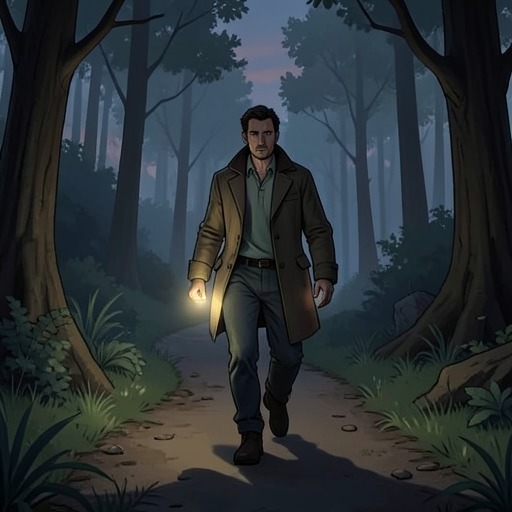
Early in the journey, Csongor turns from an experience whose reality he cannot establish to the possibility that it was only a dream. His question, “Was it real? Or did I only dream?” makes uncertainty explicit rather than resolving it. The question follows his recognition of an “enchantment of night” surrounding a scene of grief; waking perception does not immediately settle what the night’s experience meant. Instead, the dreamlike atmosphere leaves him trying to understand whether what he has seen belongs to the world or to a vision shaped by longing.
That hesitation matters because Csongor’s desire is not detached from his perception. He is searching for Tünde, and the prospect of finding her affects how he interprets what appears before him. The poem repeatedly brings him close to an encounter and then makes recognition uncertain. Dream and reality therefore function as more than contrasting states: they describe the unstable interval in which hope can make an appearance feel like fulfillment, while doubt warns that fulfillment may still be out of reach.
The road, the supernatural, and uncertainty
The setting reinforces this uncertainty. At the three-way road, where the devils enter from different directions, the action moves through a theatrical space of intersecting paths and supernatural arrivals. Later, the play identifies the place as the region of the three-way road, a crossroads that gives physical form to a journey governed by divergent routes and incomplete knowledge. Csongor’s movement through this landscape is not a straightforward passage from ignorance to certainty; its enchanted conditions make ordinary expectations about distance and arrival unreliable.
That instability becomes concrete when Csongor tries to describe how he has been carried from one place to another. He says he does not know, comparing the movement to a thought or a ray passing from one heaven to another, from one distant worldly end to the next. The simile gives an image to an experience for which he has no secure explanation. His uncertainty is not merely about whether an event happened: even when he knows he has arrived somewhere, he cannot account for the passage that brought him there.
Sleep as interruption
Sleep makes the boundary problem intimate and consequential. Csongor addresses his beloved with the wish that she sleep, adding that her dawn has not yet come. The image of a dawn not yet arrived places their hoped-for reunion in a suspended time: the language suggests awakening and fulfillment, while the scene withholds that resolution. Sleep is at once a condition of rest and a figure for delayed recognition, keeping the desired meeting in the future rather than securing it in the present.
The danger of sleep sharpens when Csongor, exhausted and overtaken by an unwanted dream, asks Balga to wake him if his beloved comes. The request exposes the practical cost of uncertainty: Csongor may be physically present yet fail to perceive the meeting he most wants. In this episode, sleep is not a harmless retreat from the quest. It threatens to separate him from the very encounter that could end his search, so the difference between dreaming and waking becomes a difference between missing and recognizing Tünde.
Recognition and the limits of certainty
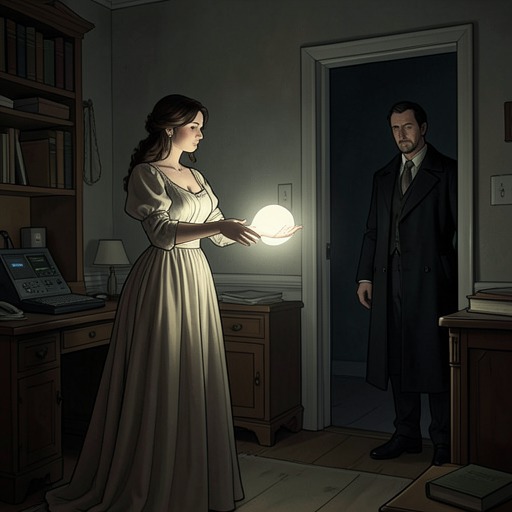
Near the end, the scene again makes perception hesitant. Tünde approaches alone, and Csongor sees her, but his response is not immediate confidence. He exclaims her name and asks whether he should still refuse to believe the deceptive apparition. The question preserves the emotional force of recognition while acknowledging that appearances have proved unreliable. A beloved figure can be present before him and still seem too unlikely to trust.
The final movement toward shared happiness changes the balance without erasing the motif. The lovers’ surroundings are described through a quiet grove, flowers, song, and the invitation of love; Csongor then confronts Tünde’s apparent presence and names her. This sequence draws the play toward reunion, but it makes recognition a threshold that must be crossed rather than an automatic consequence of seeing. Dream and reality merging thus gives the romantic plot its characteristic tension: the desired meeting is repeatedly imaginable before it can be believed.
Dramatic significance
The play uses uncertainty in perception to bind its enchanted machinery to Csongor’s emotional experience. Supernatural movement makes travel difficult to explain; night and dream make experience difficult to classify; longing makes recognition difficult to trust. These elements reinforce one another, so that the question of what is real becomes inseparable from the question of whether the lovers can meet.
The motif also shapes dramatic pacing. A possible encounter does not instantly end separation: Csongor may doubt what he has seen, or sleep may prevent him from seeing at all. The final recognition answers that tension through a personal act of naming and belief, not through a detached explanation of every strange event. Reality becomes secure at the moment Csongor can accept Tünde as present. The play’s resolution therefore gives the dreamlike uncertainty a clear emotional outcome while preserving its role as the force that made reunion precarious.